The friction
Someone forgot the deck
Then someone keeps score on paper, and the rules get argued at every round.
Case · Consumer product · Party games
Your phones are the controllers. Any screen is the table.
Tap a box: the table and the phone switch games.
The bet
The friction
Then someone keeps score on paper, and the rules get argued at every round.
The insight
A phone can show a private hand. A TV or a tablet can be the shared table.
The promise
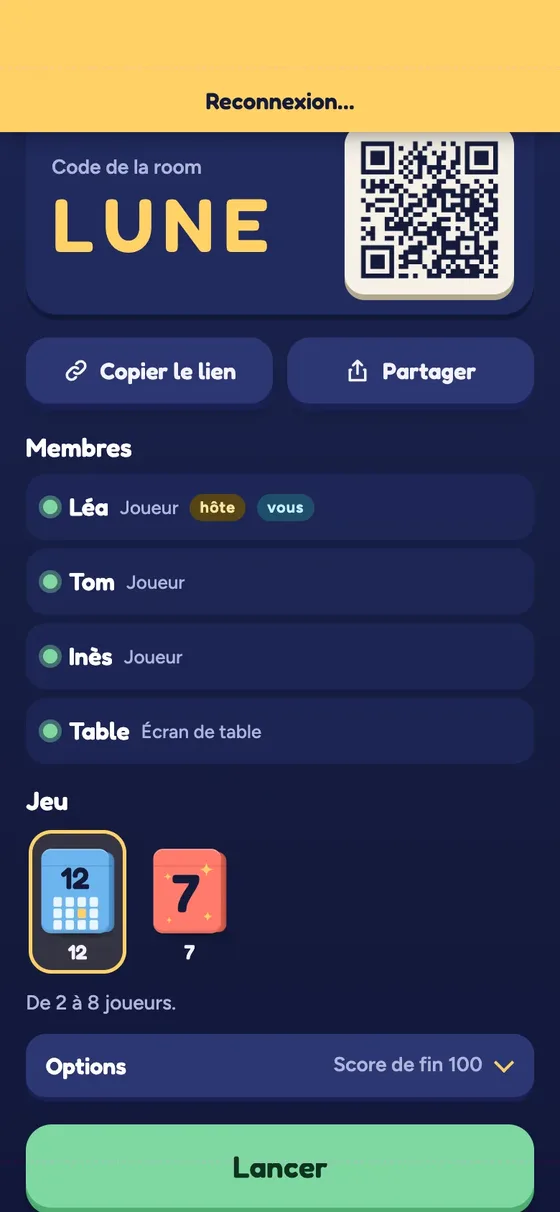
A four-letter code or a QR code. No account. The app deals, checks and counts.
The line-up
Each game was picked for what it adds to the product, not just to the catalogue. Each one tests a new mechanic of the platform.
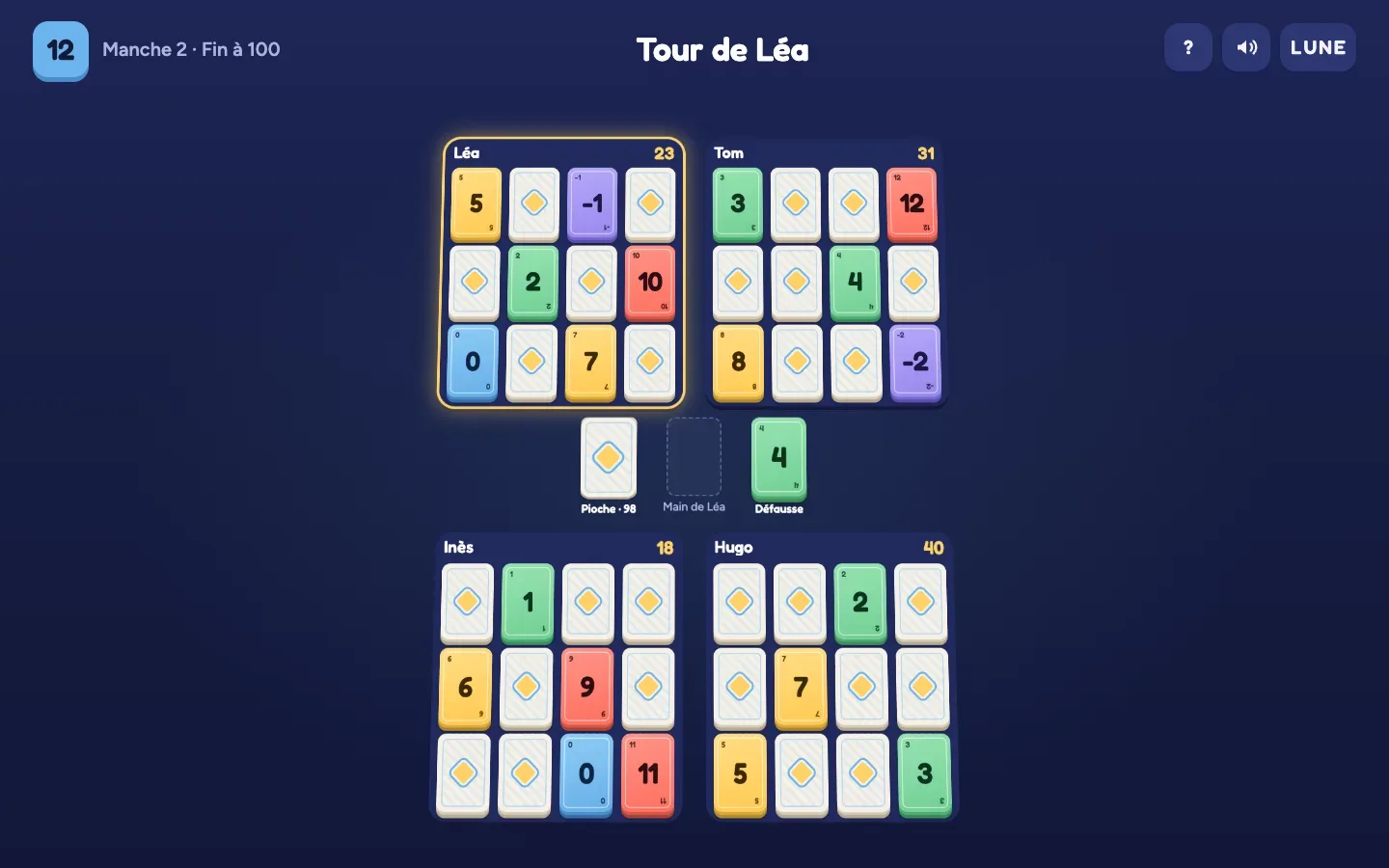
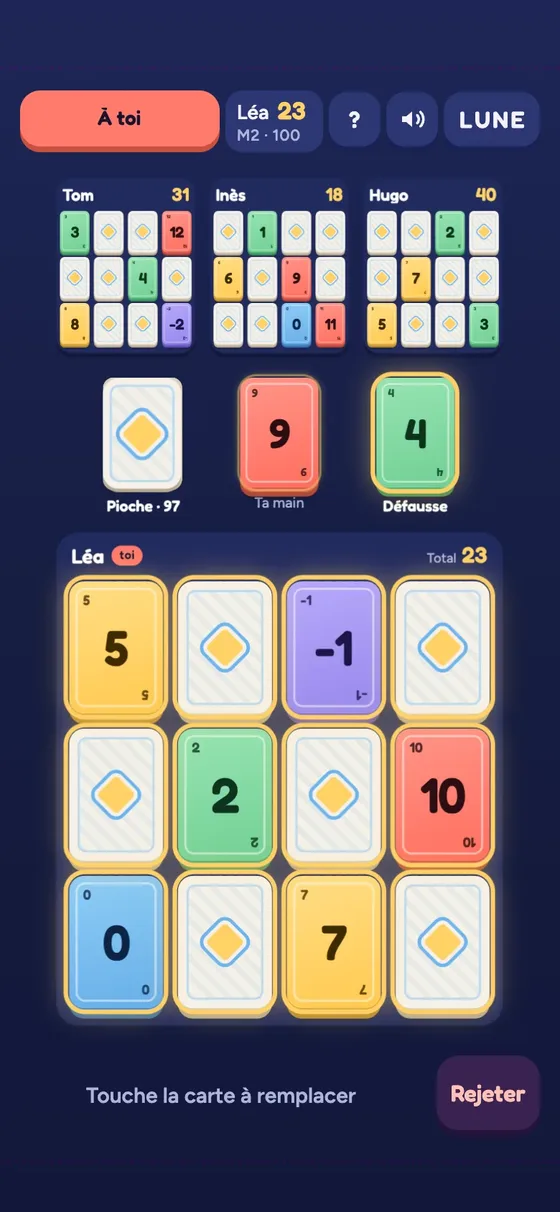
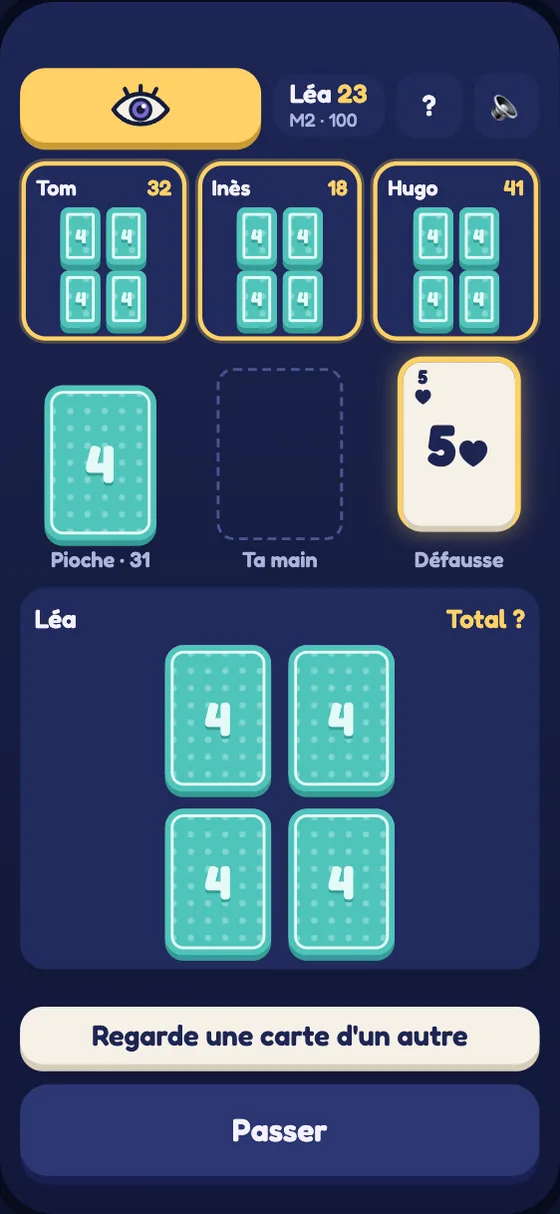
Flip, swap, aim for the lowest total. The first game set the contract every game now follows: a pure rules engine, hidden cards, rounds and scores.
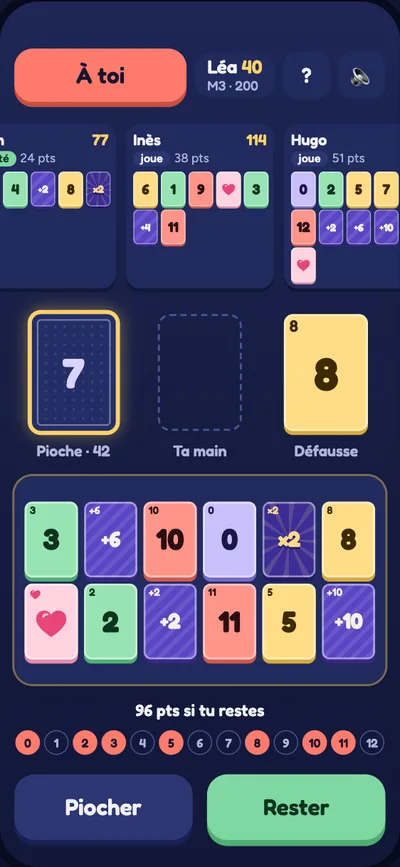
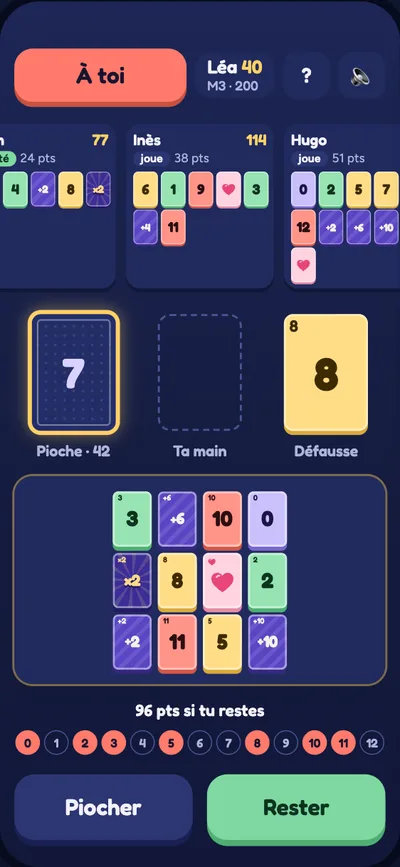
Draw again or stop. Built in parallel with 12 to prove the contract holds for a second game. It brings the big tables.
Everyone plays at once. Cards are revealed in one go, then placed one by one, so the table can follow.
The classic 52-card deck arrives: suits, special cards, a direction of play that flips.
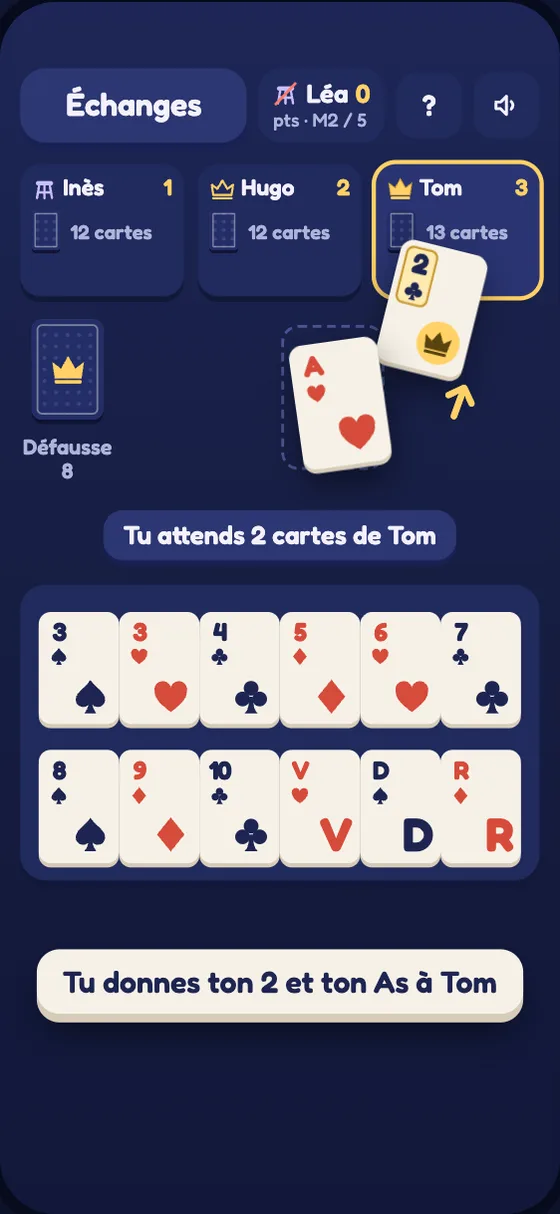
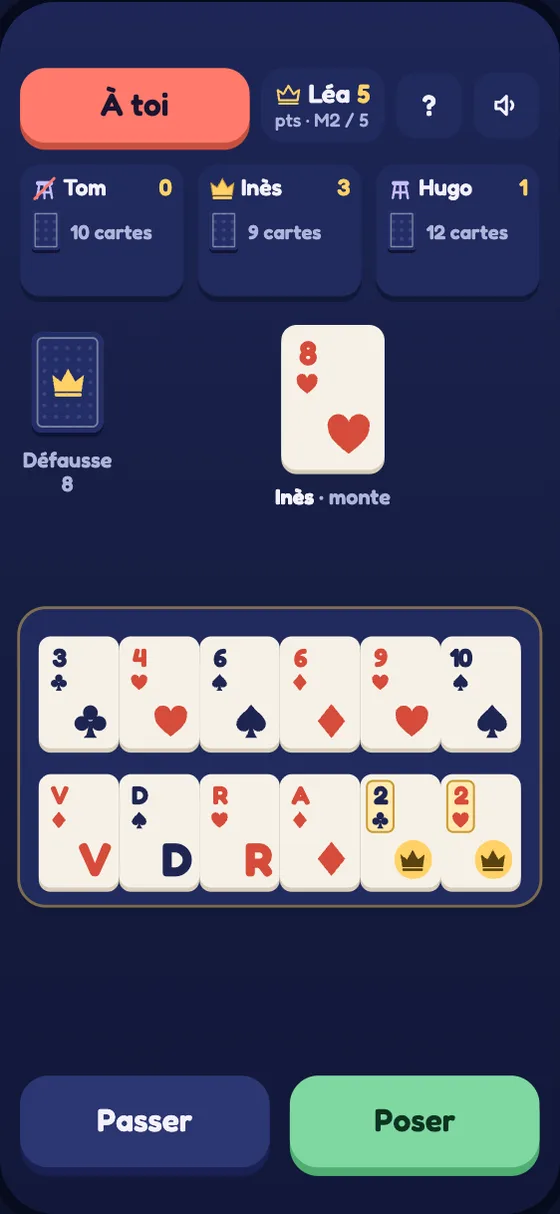
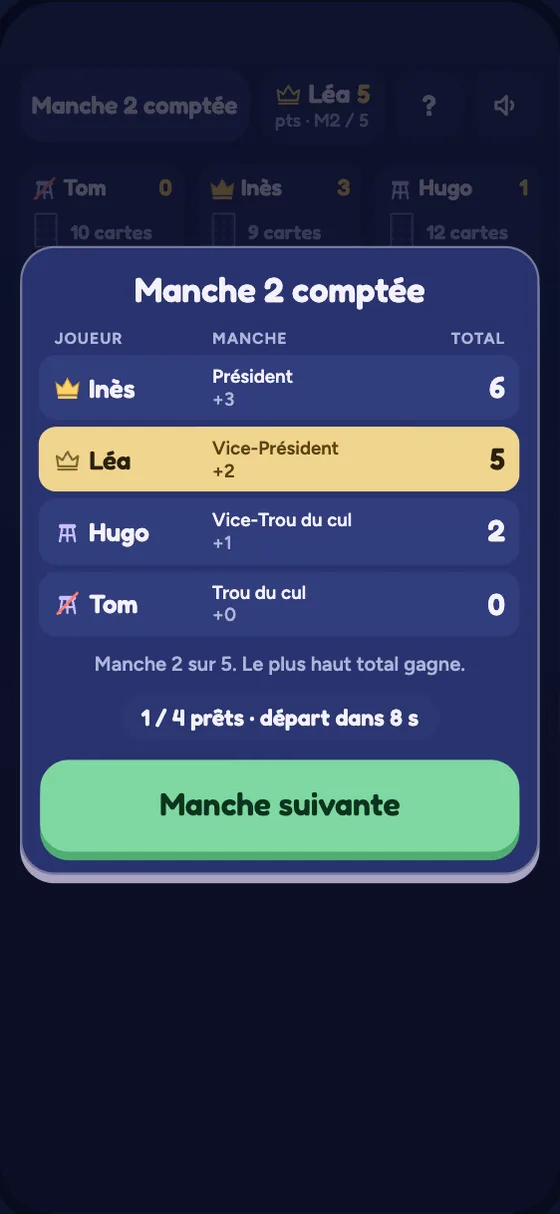
Roles carry over from one round to the next: the winner and the loser trade cards before play starts.
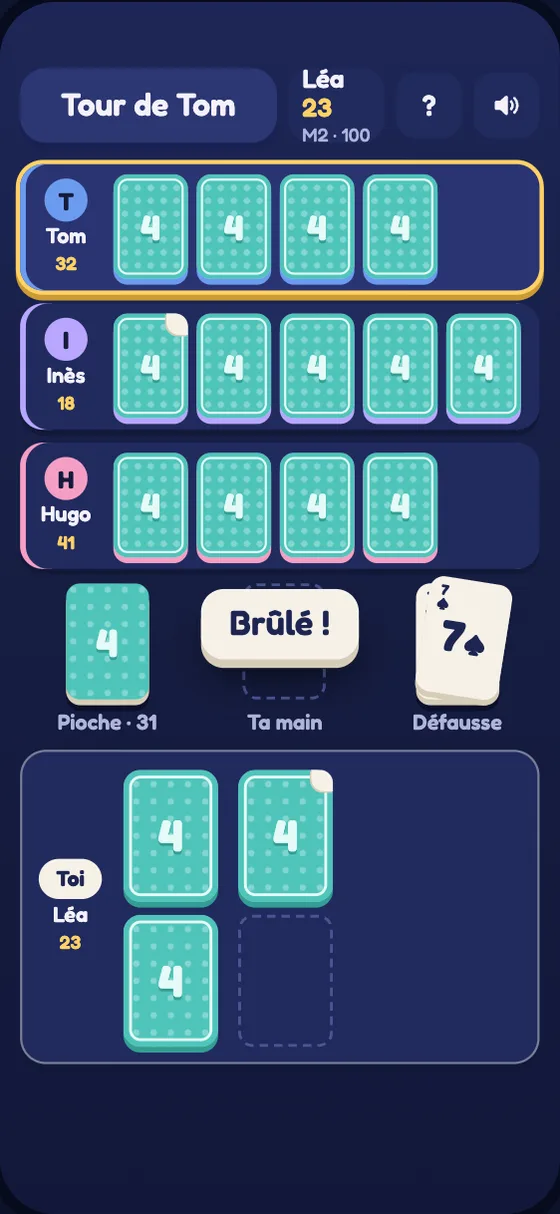
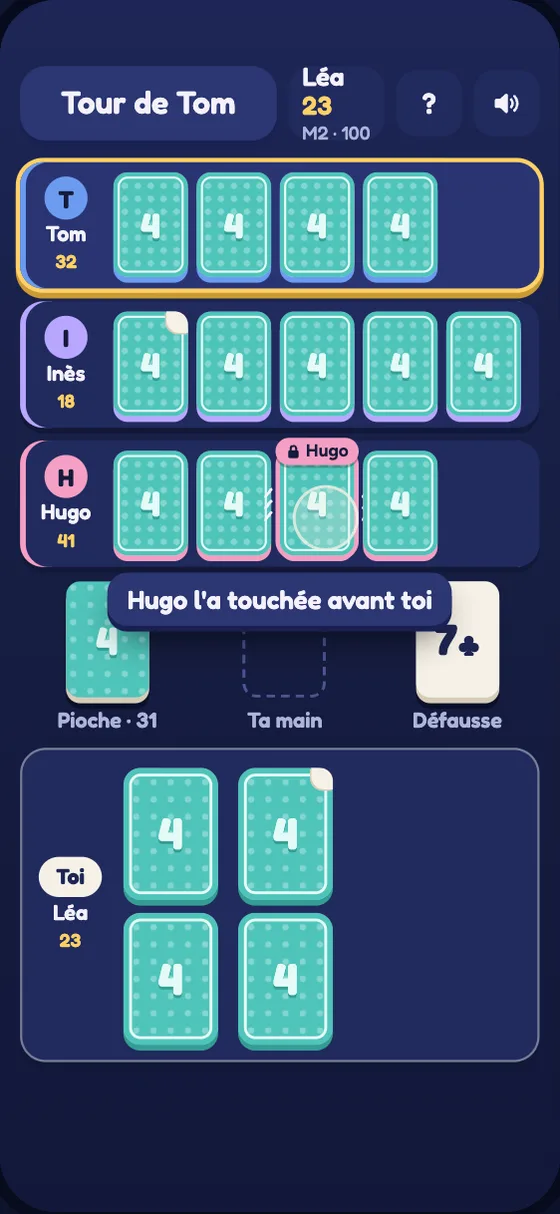
The reflex game: anyone can play out of turn. The hardest real-time case, kept for last.
The method
Every change follows the same loop. Nothing reaches the main branch without its spec, its tests, and a decision on real screens.
A short proposal: why this change, what is out of scope.
Acceptance scenarios, one per behaviour. Open questions go to the decision maker, with a default.
One change at a time, in an isolated copy of the code. Tests run after every file saved.
An adversarial review reads the diff against the spec, scenario by scenario. It reports, never fixes.
Captures at phone and desktop sizes, a floating list: OK or Not OK, with the reason.
The spec is archived as the durable log of decisions. The next change starts from it.
Agents with roles
One agent writes the plan and never touches the code. One builds. One reviews with read-only tools. The human decides between steps.
Mechanical locks
Lint, types and the full test suite gate every change. A conformity suite checks that each new game respects the shared contract.
Fair play
The server holds the deck. A player's screen only receives what that player may see, and tests check every message.
Iterations
No visual goes to code before a mock-up that convinces. Each question is shown as options on the same screen, and the call is written down with its reason.
Art direction
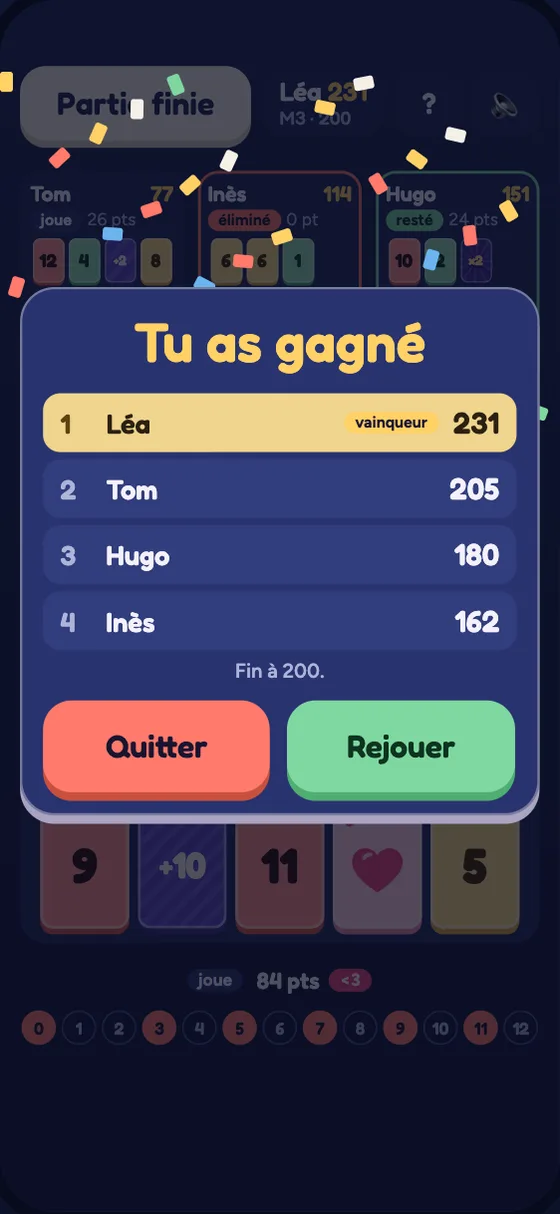
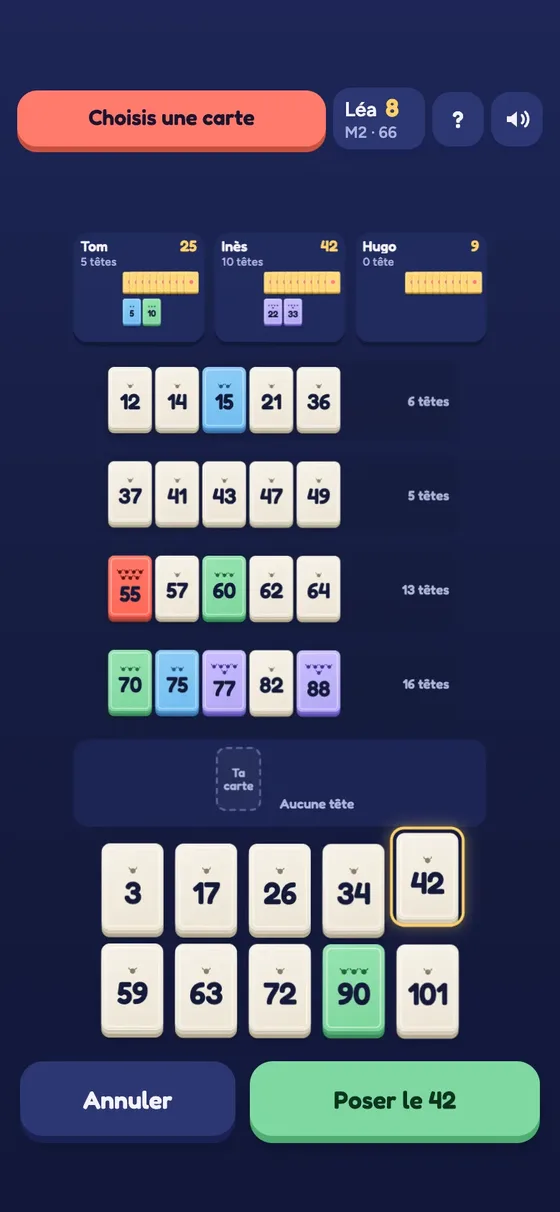
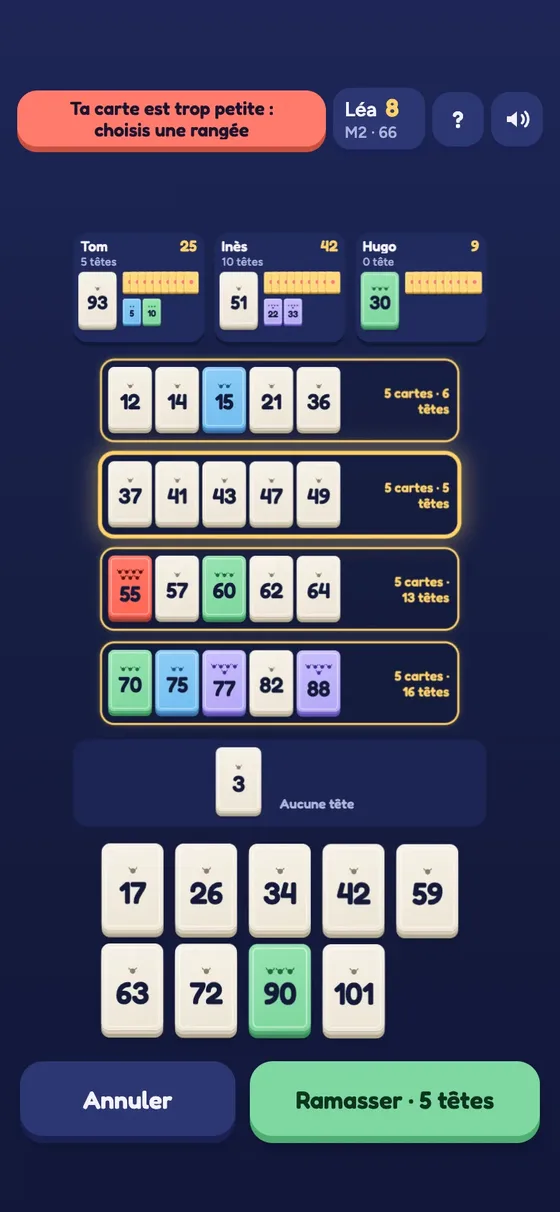
Festive cartoon, boxes in volume, precious cards. Boxes in volume won, then the “Soirée” palette: night blue, milk-white cards, coral and mint buttons, a yellow halo for “your turn”. Built as the first skin of a system, so the next ones swap tokens, not code.
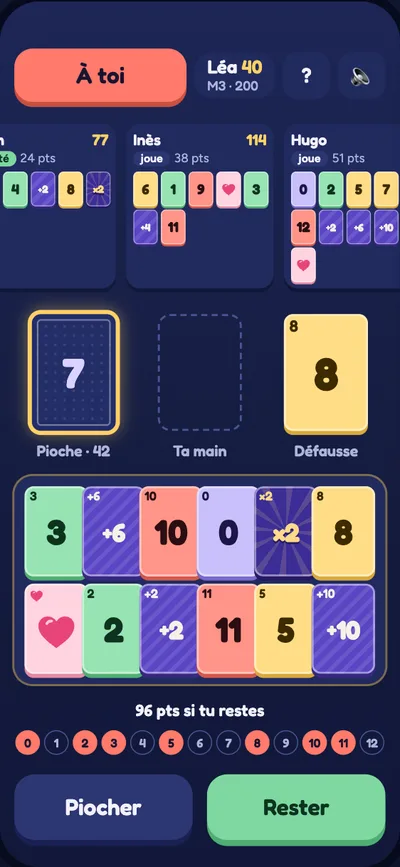
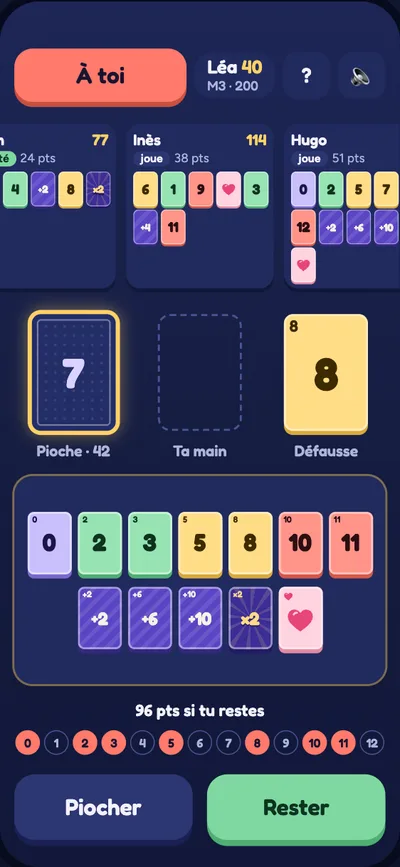
7 · A loaded hand
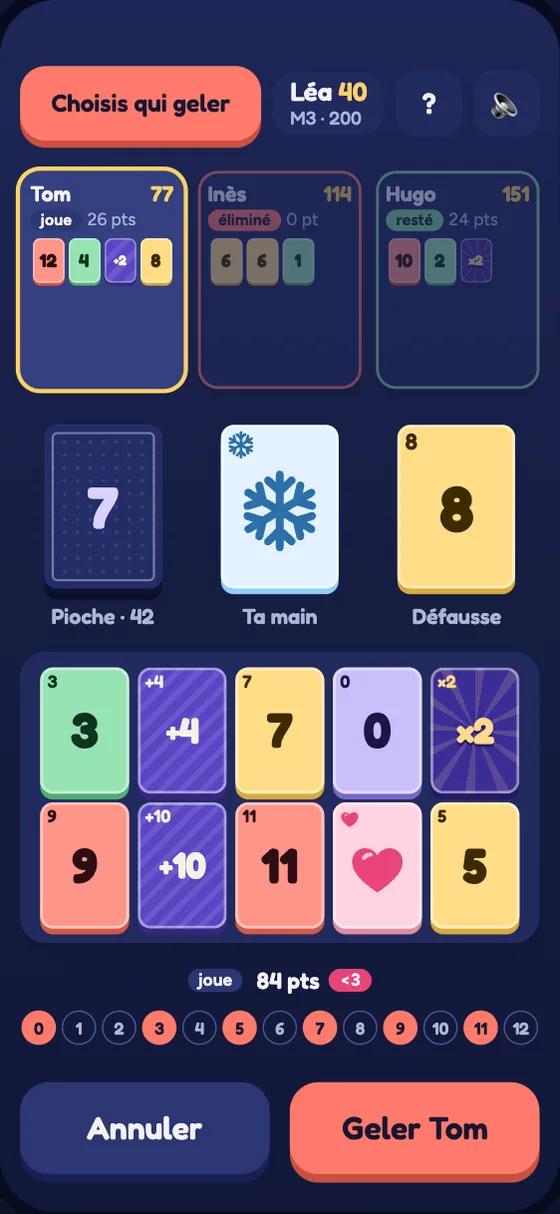
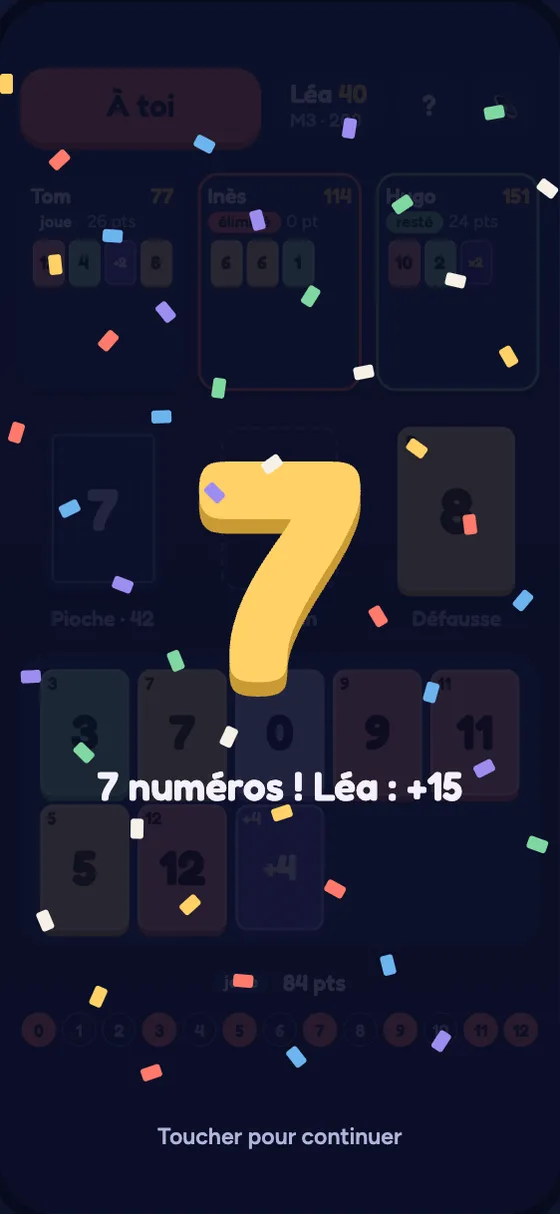
In 7, a lucky player can hold twelve cards. Four layouts were mocked at full load. D looked smartest on paper. On a real phone, A read fastest: two rows, cards that shrink.
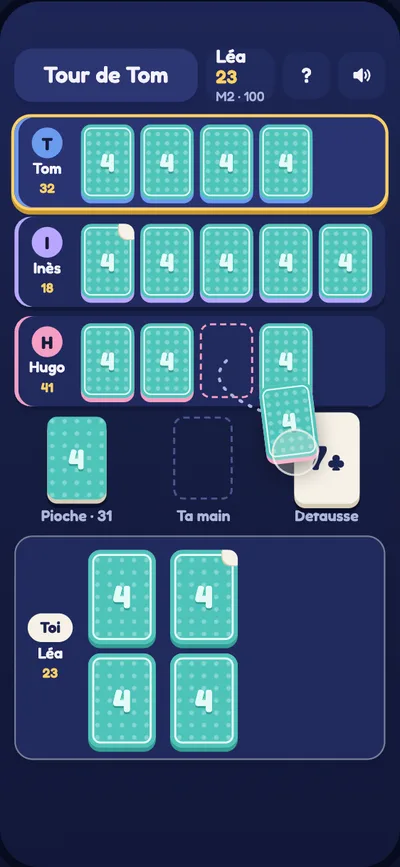
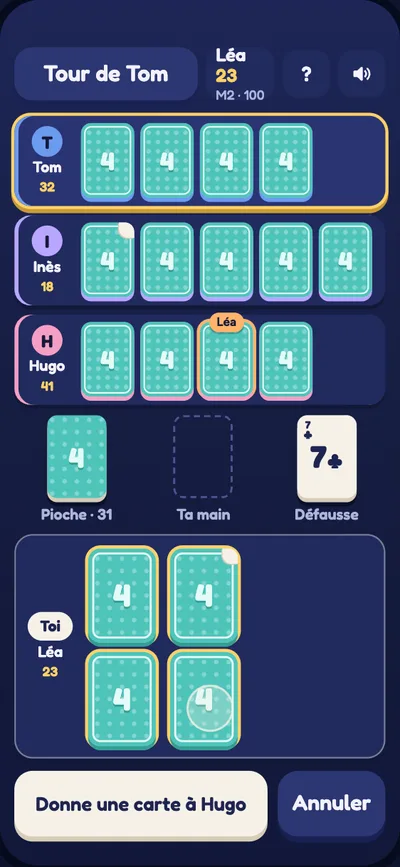
4 · Playing out of turn
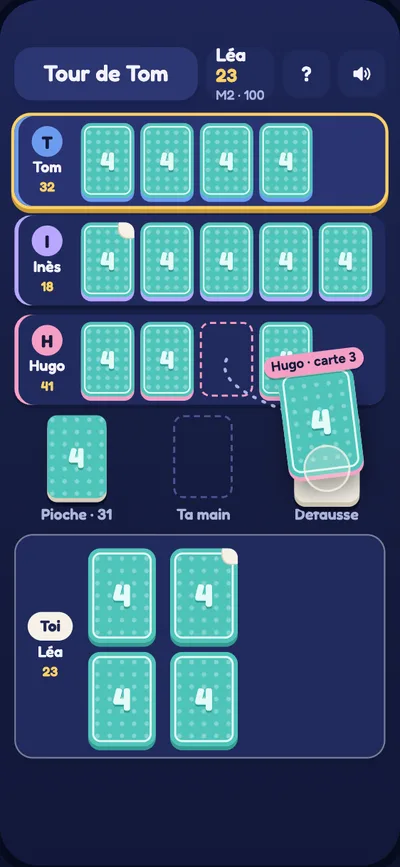
In 4, anyone can slap a matching card on the discard, even out of turn. Burning another player's card took three taps: too slow for a reflex game. Three gestures were mocked. The rule that came out: the first touch wins, and the game is capped at four players so every card stays in reach.
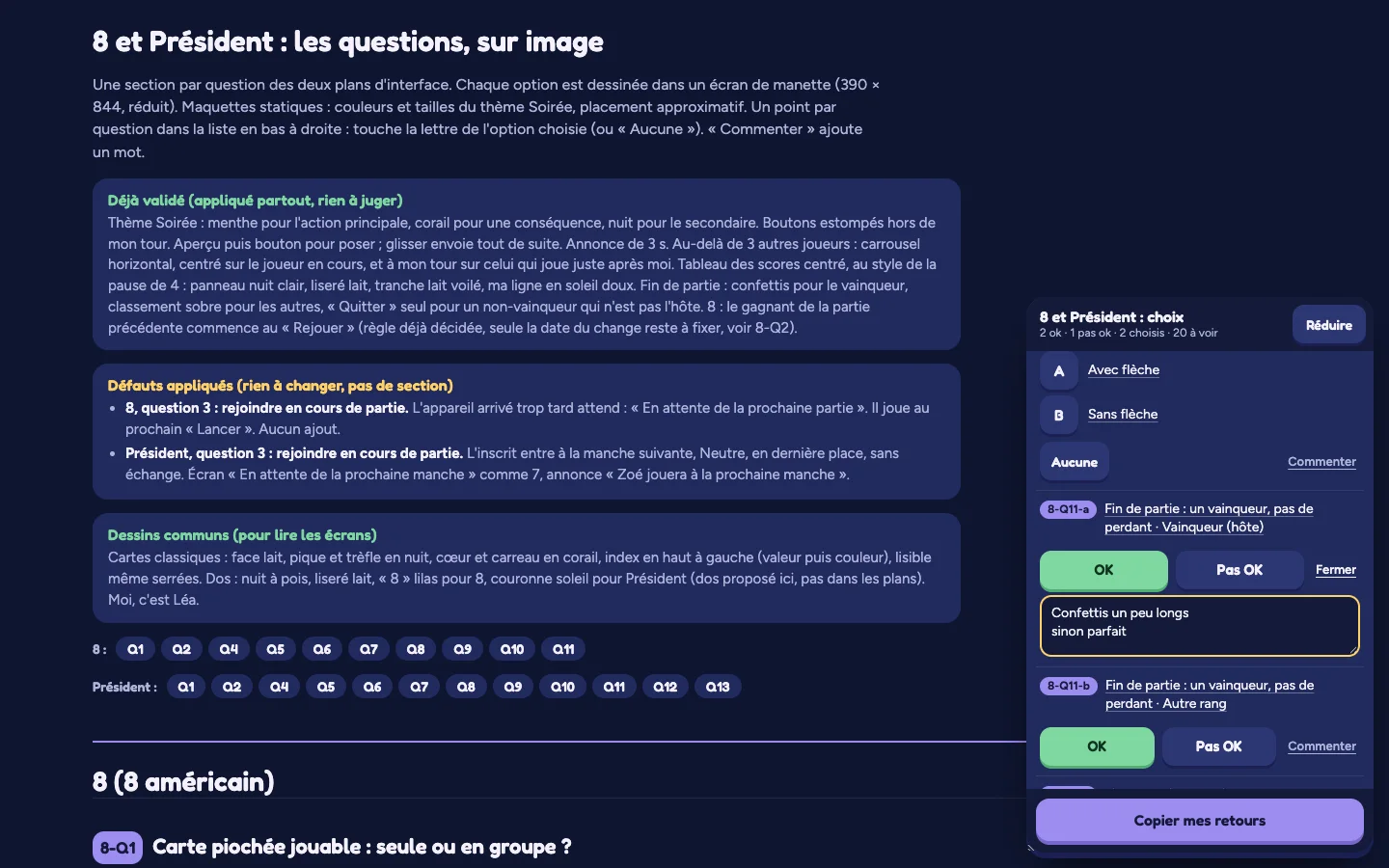
The mock-up loop
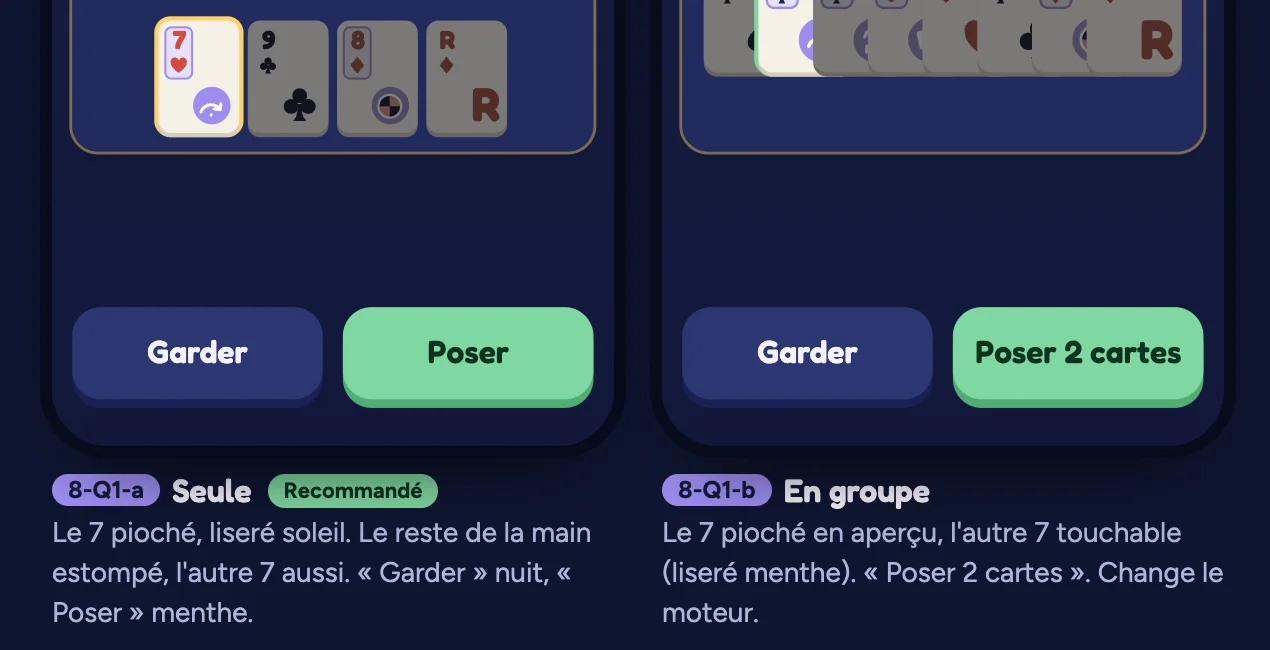
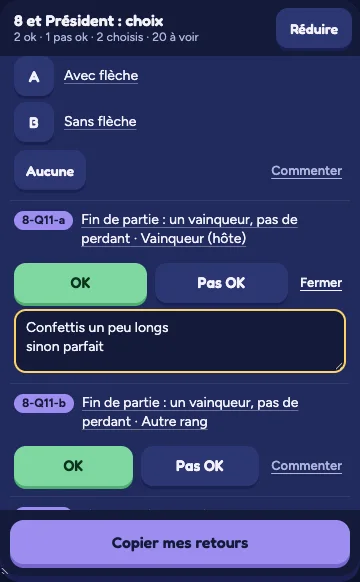
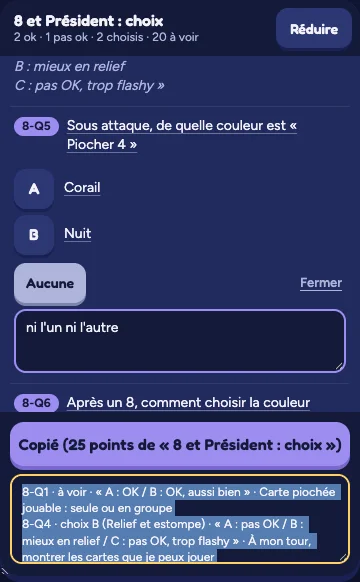
Every open question becomes a page of mock-ups. Each option is drawn in a phone frame, in the theme's colours. A floating list sits in the corner, one line per question.
Each question shows its options side by side. One is marked “Recommended”, with the reason.
Choices already validated and defaults applied sit in a box at the top. Nothing is judged twice.
Tap the option's letter, or OK / Not OK. “Comment” opens a field only when there is something to say.
One button copies every answer and comment, ready to paste. The next version only shows what is still open.
The room
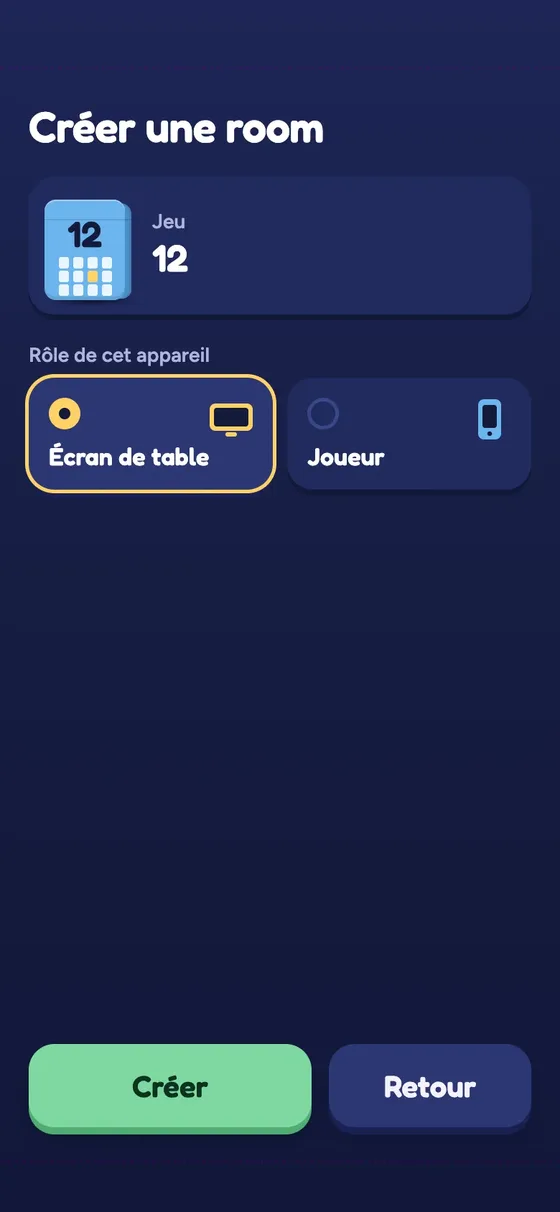
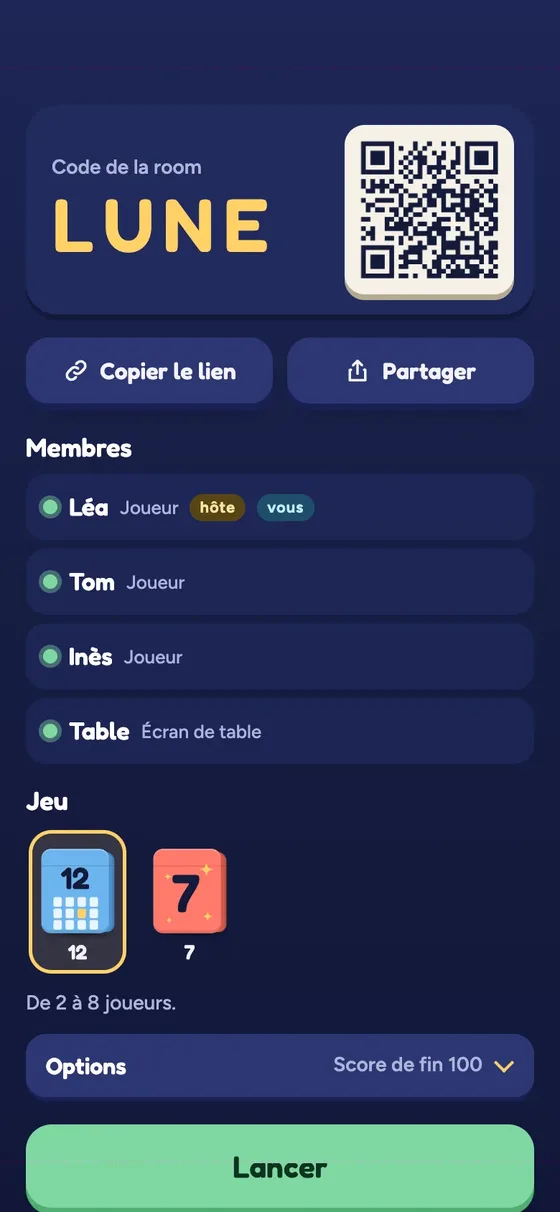
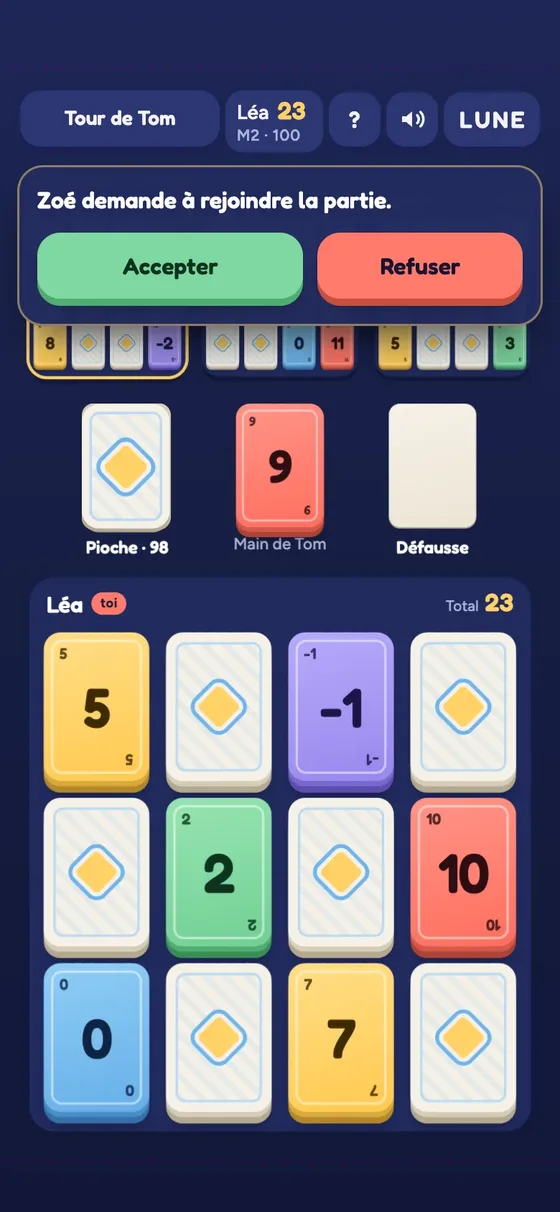
The screens
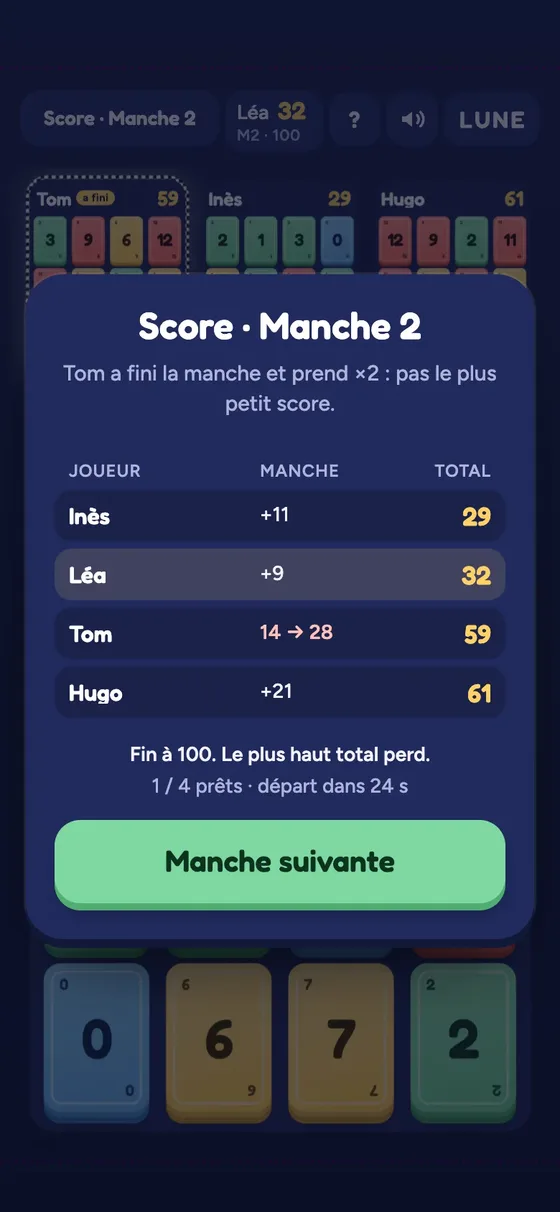
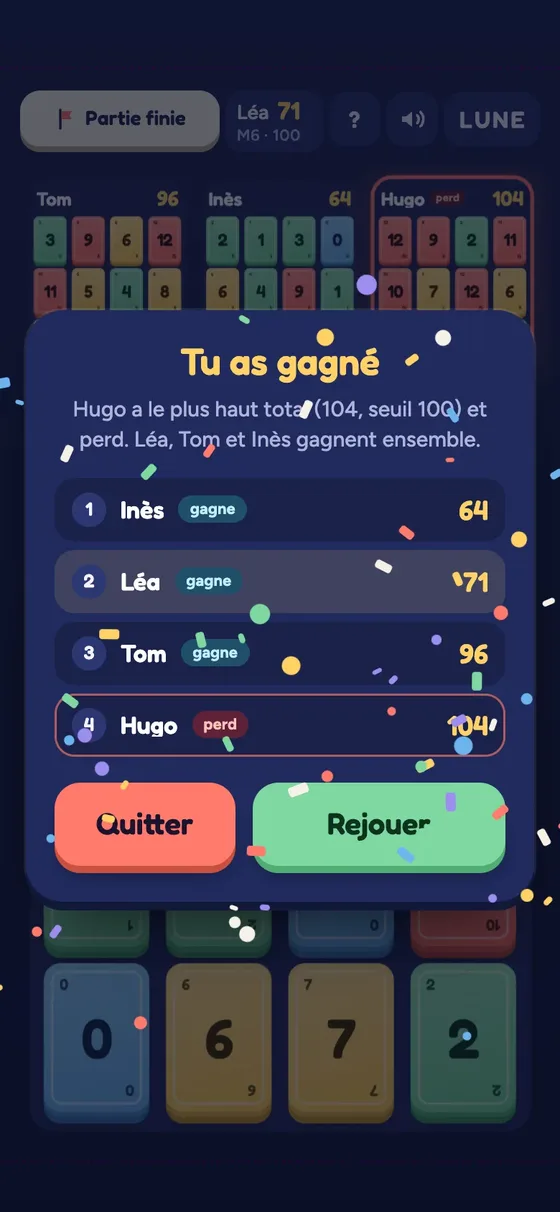
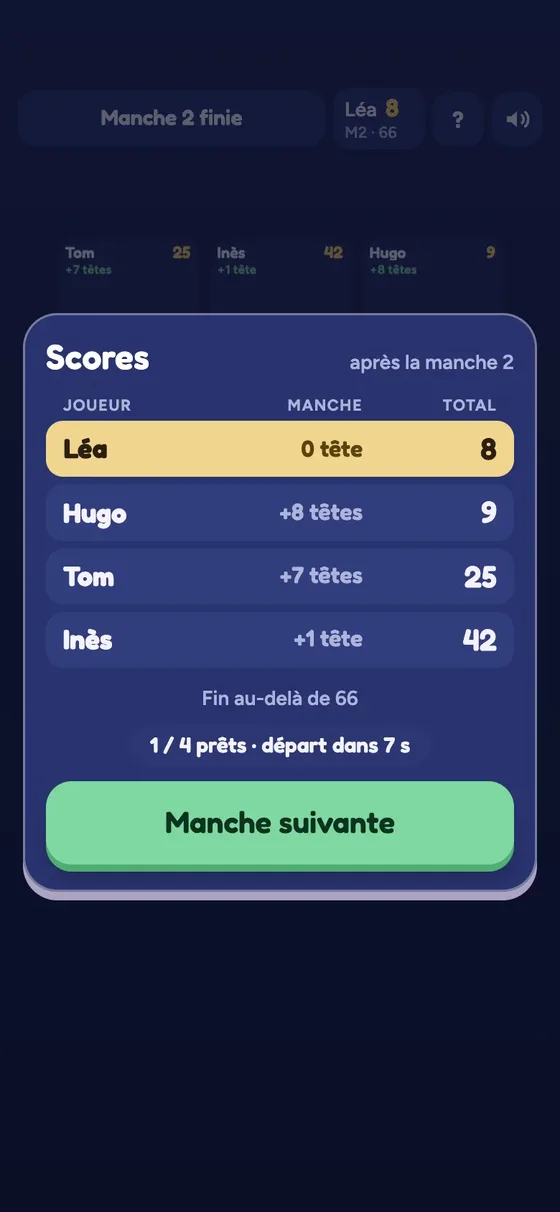
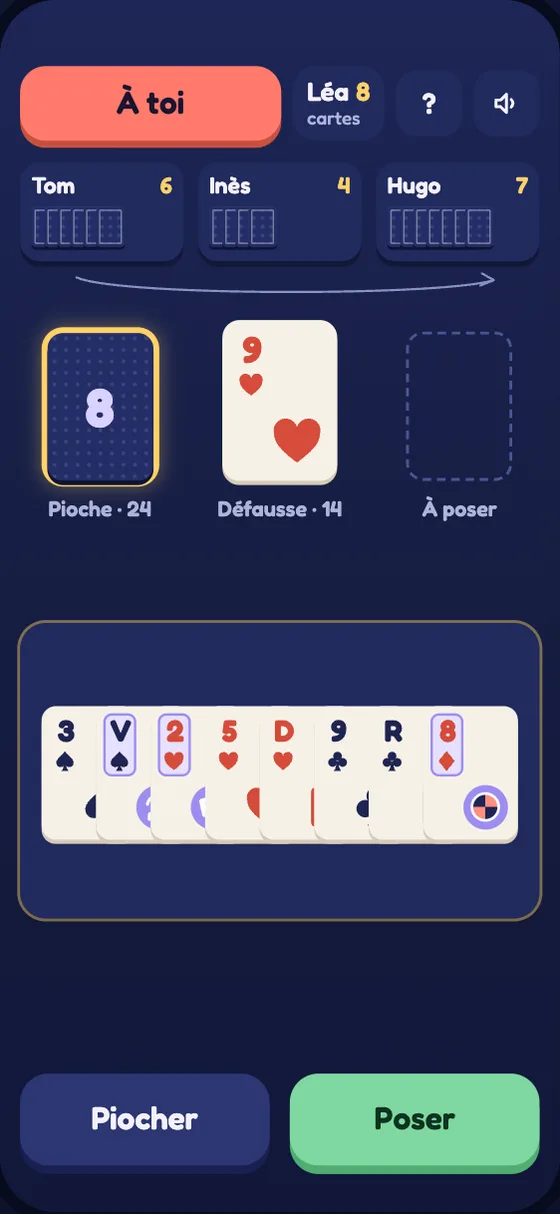
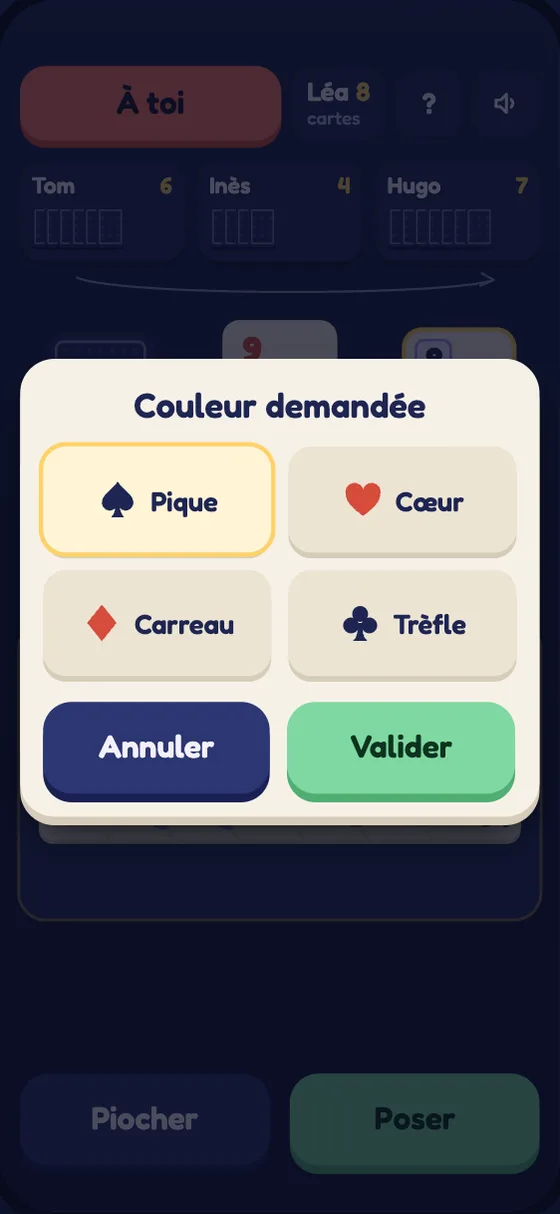
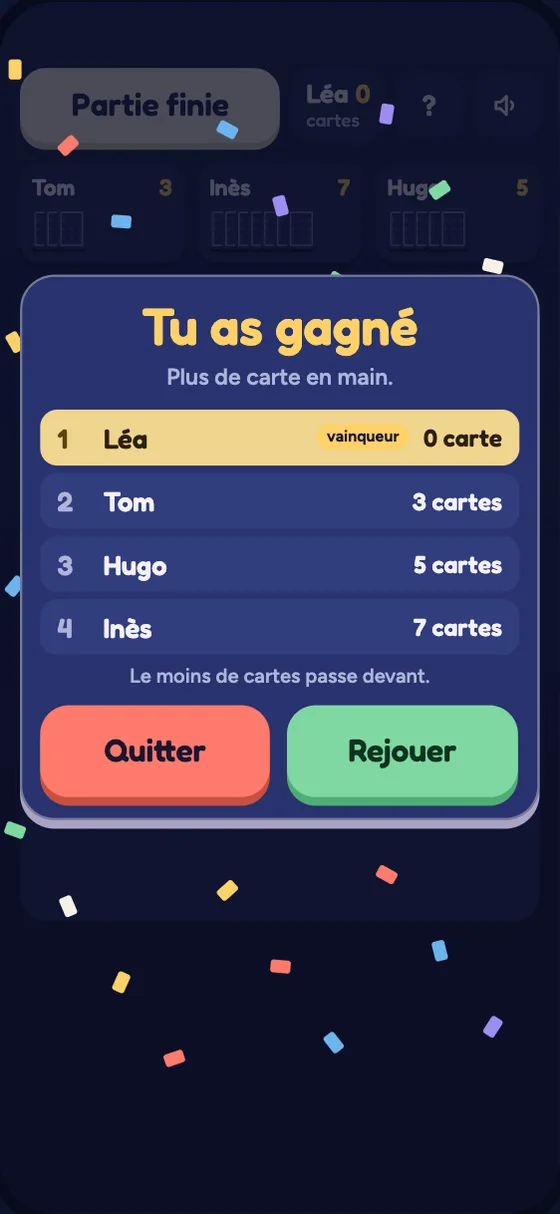
Same buttons, same halo, same rhythm. Each game keeps its own cards and its own moments.
Screens in French, the app's first language.
What comes next
Open a room from any browser, phone or TV.
The same code wrapped as native apps, with real haptics on every phone.
Soirée is the first skin. New skins as in-app purchases, ads in the free version, a purchase to remove them.
Quick facts
Player counts from each game's definition and spec.